
Ladies Of The Garden
Chat With The Author
In this section, Barbara Alice Anderson, author of the Ladies of the Garden series, sits down to talk about writing the books, living alongside the characters, and how this world came into being. It’s a look behind the curtain — how the women arrived, how they grew, and what it’s like to build a universe that refuses to stay quiet. This is where the Garden speaks, and where the author finally gets a chance to answer back.
#1 — The Day Lola Walked In
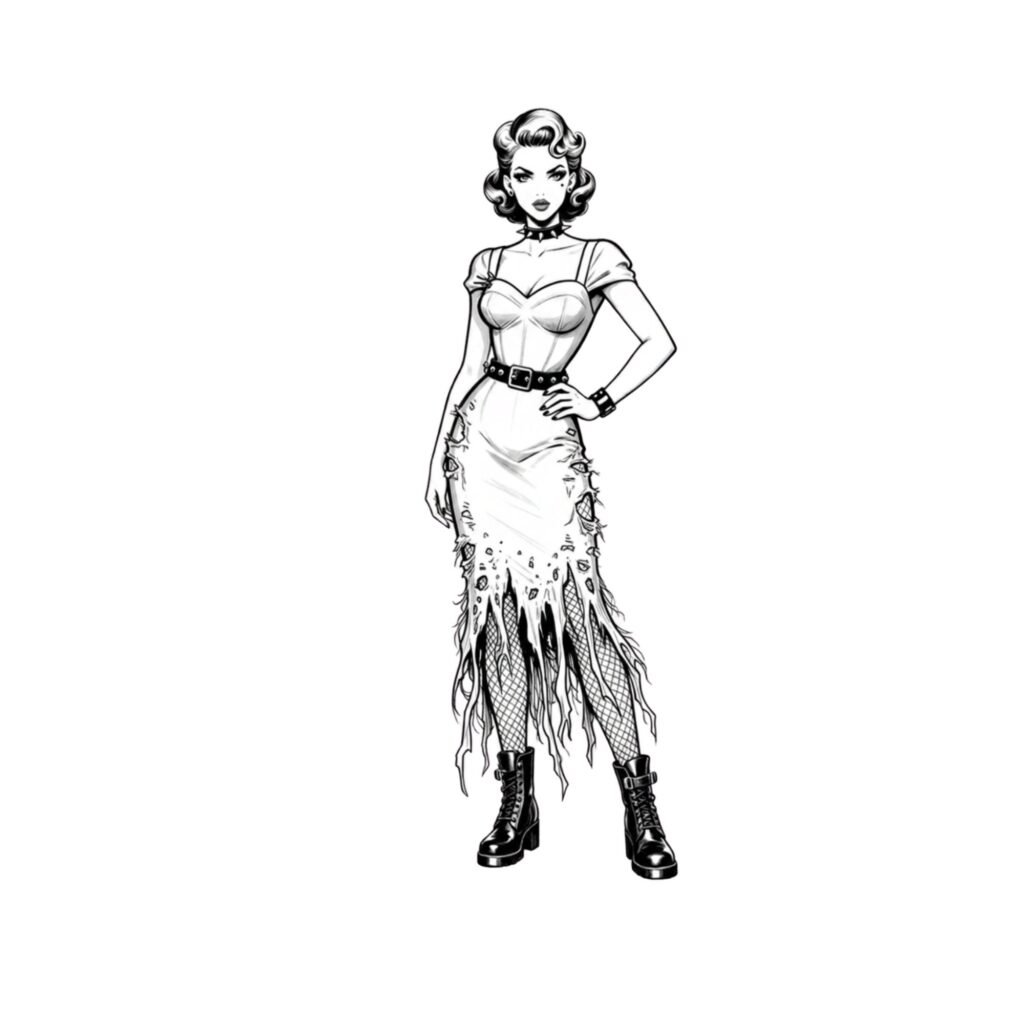
The Garden didn’t begin as a story. It began as a sketch — a logo for my production company, GakFace Productions. I wanted something that felt like 1950s housewife colliding with punk rock, a clean domestic silhouette torn open by rebellion. I expected a graphic. What I got was a woman.
She appeared on the page exactly like this: vintage hair, combat boots, fishnets, a skirt ripped like she’d fought her way out of something and didn’t bother to smooth it down. Small frame. Sharp posture. Unapologetic presence. She wasn’t a design. She wasn’t a concept. She was a declaration. Lola stepped forward with the kind of energy that doesn’t ask permission. She looked at me — or through me — and made it clear she lived here now.
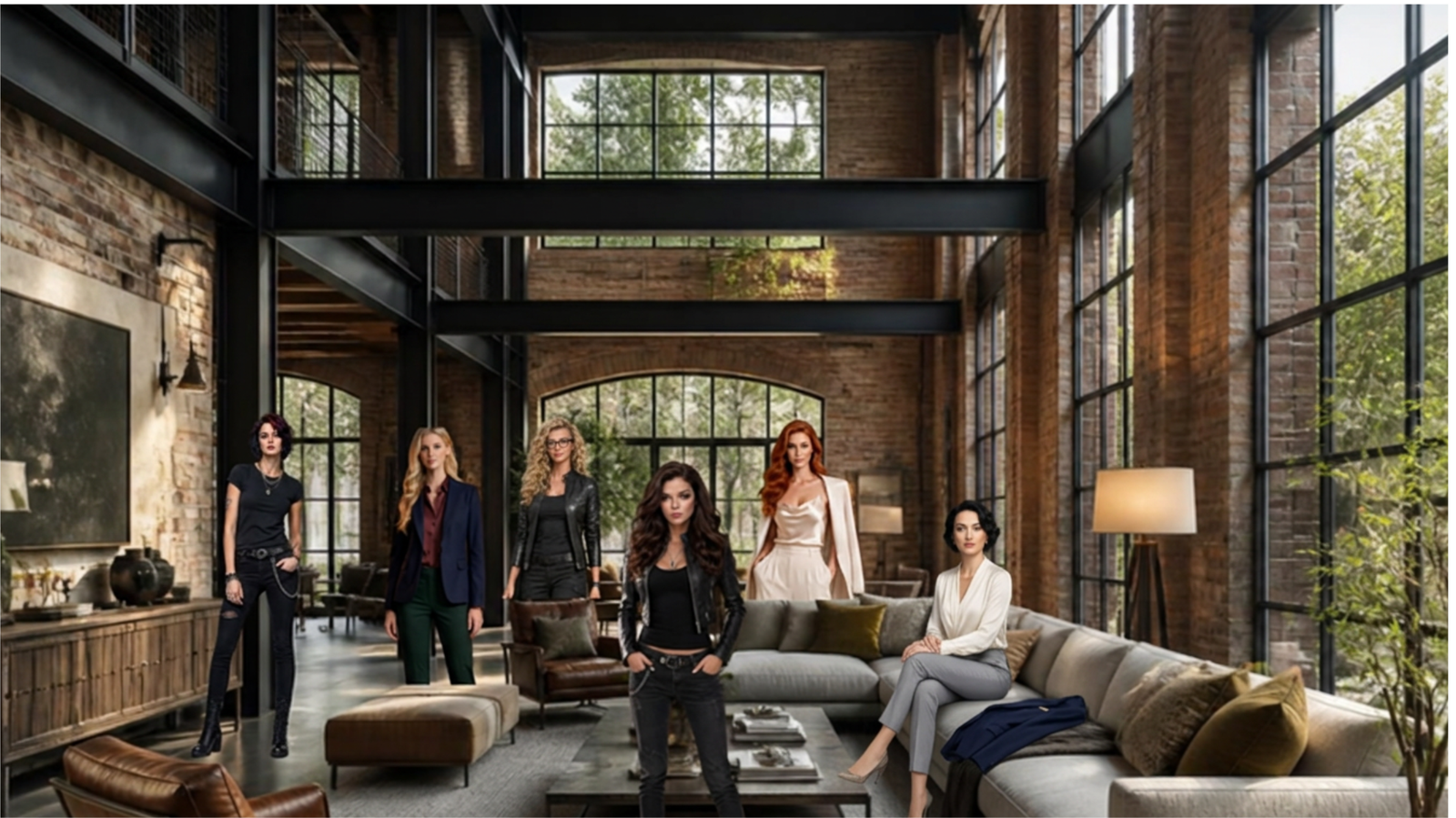
I needed backup images for the production company, but what arrived instead were more women who behaved like Lola: not illustrations, not placeholders, but fully formed people with their own histories already intact. Molly came next, born into privilege but refusing to be ornamental. Then the sisters, Fannie and Jewel, carrying the same childhood in two different directions — one becoming steel, the other becoming justice. Estelle followed like a Joan‑Crawford‑meets‑Dietrich apparition, elegant and dangerous in equal measure. JoAnne surfaced last, unexpected and necessary, born from the shadow of Estelle’s image. None of them were designed. They were discovered.
These women didn’t wait for a world to be built around them. They demanded one. The Garden grew because they needed a place to exist together — a place that could hold their loyalties, their fractures, their private wars, and the justice they were willing to create when the world failed to provide it. The Garden wasn’t the origin. It was the consequence of their arrival.
Writing them meant accepting that they were real long before the book was. Lola is lived experience. The others are lived truth. And once they stepped off the page, the story stopped being an idea and became a responsibility.
#2 — Behind the Photoshoot
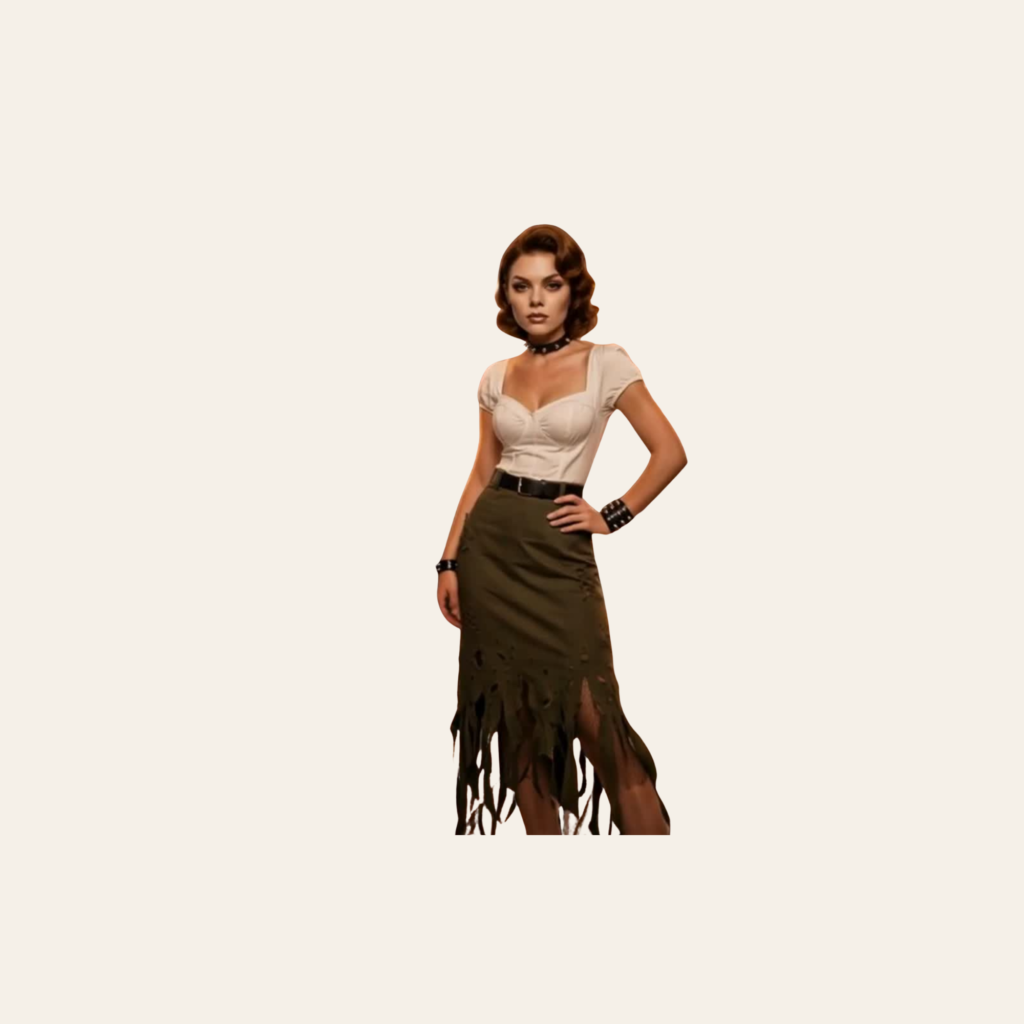
There’s a moment in every creative project when the work stops being theoretical and becomes flesh. For me, that moment happened during the two‑day photoshoot. I had lived with these women in my head for months — their tempers, their loyalties, their private wounds — but seeing them embodied changed everything. Lola had already stepped off the page long before this, but watching her stand in front of a camera made her impossible to categorize. She wasn’t a drawing anymore. She was a force.
Her stance — the vintage hair, the combat boots, the torn hem, the fishnets — carried a kind of defiance that didn’t need to be performed. It was simply who she was. And once she was in the room, the others had to rise to meet her. Molly sharpened. Fannie steadied. Jewel’s quiet became louder. Estelle’s elegance turned dangerous. JoAnne’s softness revealed its backbone. They weren’t posing. They were revealing themselves.
Each outfit carried its own truth. Some of the women hardened when the fabric settled on their shoulders; others softened, as if the right color finally let them breathe. The clothes didn’t decorate them — they exposed them. And as the locations shifted, so did the dynamic. A woman who seemed guarded in one setting became unexpectedly dominant in another. A quiet one sharpened. A bold one steadied. They rearranged themselves like a living constellation, each movement altering the story’s gravity.
There were small, unplanned moments that told me more than any outline ever could. A glance held too long. A stance that contradicted her dialogue. A laugh that didn’t belong to the character until it suddenly did. I watched them negotiate space with one another, forming alliances and tensions without saying a word. It was the first time I understood that the ensemble wasn’t just a cast — it was a system. And systems have rules, even when no one speaks them aloud.
Seeing them in person forced me to rewrite the way I thought about the Garden. I realized the world wasn’t built around plot; it was built around these women and the way they move through it. Their physical presence clarified the emotional architecture. It made the stakes real. It made the danger real. It made the tenderness real. And it made the responsibility of writing them heavier in the best possible way.
The photoshoot didn’t just give me images. It gave me proof. Proof that the Garden exists, that the women belong to it, and that the story I’m telling is grounded in something more than imagination. It’s grounded in them.
#3 — When the Characters Start Talking Back
There’s a point in every book when the characters stop waiting for permission. They begin to speak in their own cadence, interrupting your plans, refusing your outlines, insisting on truths you didn’t intend to write. It doesn’t happen all at once. It begins quietly — a line of dialogue that arrives with more weight than you expected, a reaction that contradicts the neat arc you mapped out. But once it starts, you can’t unhear them. They become louder than the plot.
For me, that shift happened after the photoshoot. Seeing Lola embodied — not just sketched, not just imagined, but standing in combat boots and torn hem with her chin set in that unmovable way — changed the way she moved through the story. She wasn’t a character anymore. She was a person with her own rules, her own silences, her own boundaries. And once she asserted herself, the others followed. Molly sharpened. Fannie steadied. Jewel’s quiet became a kind of truth-telling. Estelle’s elegance turned predatory. JoAnne’s softness revealed its spine. They weren’t performing. They were revealing themselves.
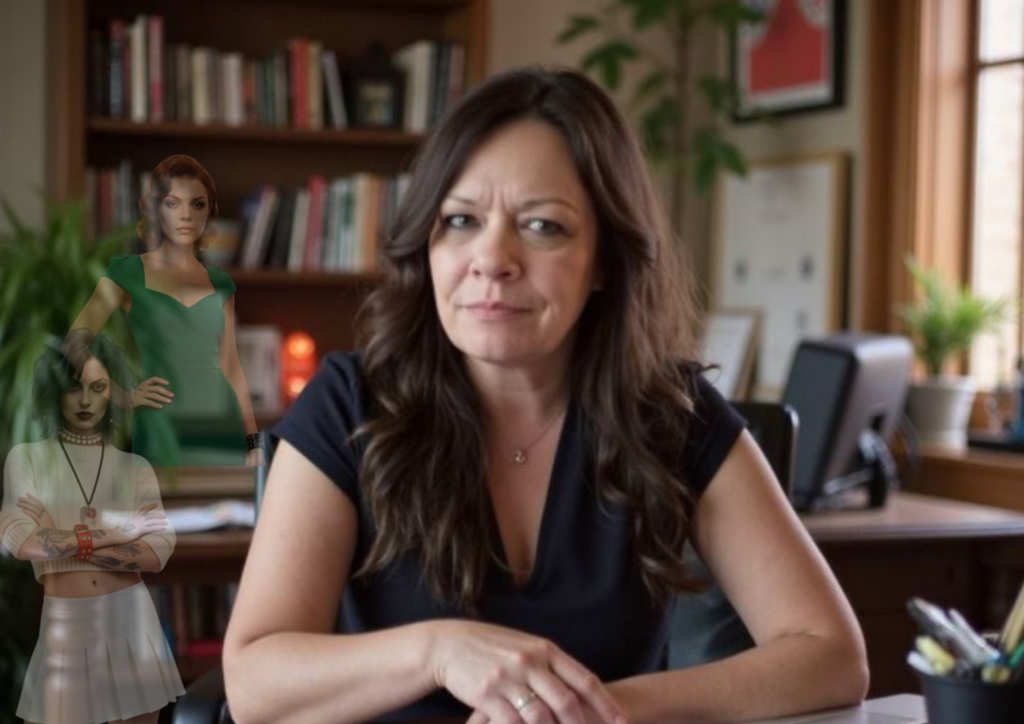
Their voices shifted too. A woman I had written as steady showed me the fracture she’d been hiding. Another, originally meant to be comic relief, carried a grief that altered the tone of every scene she touched. One of them — the one I thought I understood best — began to resist every assumption I had made about her. She wasn’t softer than the others. She wasn’t harder. She was something else entirely, and she refused to be simplified.
Their interactions changed in ways I couldn’t control. Alliances I planned dissolved. New ones formed without warning. A glance between two women rewrote an entire chapter. A silence between another pair carried more danger than any confrontation I could have scripted. They were building their own architecture inside the Garden, and I had to follow it instead of forcing them into mine.
This is the part of writing that feels closest to faith. You trust the characters to lead you somewhere honest. You trust the story to hold together even when it bends. You trust that the truth they’re offering — however inconvenient, however disruptive — is better than the version you tried to control. And when you surrender to that, the book stops being a project. It becomes a living thing.
The Garden didn’t come alive because I wrote it. It came alive because the women inside it refused to be quiet. They told me who they were. They told me what they wanted. And they told me what the story needed to become.
#4 — Carrying the Garden
At some point, the Garden stopped being a project and became a responsibility. The women didn’t stay in the sketches or the photoshoot or the quiet moments when they first began to speak. They stepped into my life with their truths already formed, expecting me to tell them honestly.
Lola arrived defiant. Molly refused to be ornamental. Fannie and Jewel carried their shared childhood like a wound and a compass. Estelle sharpened elegance into danger. JoAnne revealed her softness as strength. None of them waited for me to shape them. They shaped themselves and demanded accuracy.
Writing them means listening. It means following the story they insist on, even when it bends away from convenience. It means honoring the justice they create when the world fails to offer any. The Garden isn’t fantasy. It’s the truth of what people become when their worlds demand more than survival.
This is where the author steps into the frame — not to control the story, but to witness it. To carry it. To tell it with the weight it deserves.
The Garden is fiction. But the truth inside it is real.

#5 – Now Published!
My debut novel is now available across several platforms, making it easy for readers to find it in whatever format they prefer. I sold my first physical copy at Barnes & Noble, which was a milestone I’ll never forget. The book is available there in both physical and ebook formats. For readers who enjoy serialized digital reading, the book is also published on Readerful. Chapters 1 through 8 are free, and additional chapters are available for $2.99 each, which is their minimum pricing. It’s a simple way for new readers to sample the story and continue at their own pace. I’m also on Wattpad, where the book can be read within a community setting. It’s another place to follow the story and stay connected as the series grows.
Wherever you prefer to read—physical books, ebooks, serialized chapters, or online communities—you can find my work. This is only the beginning, and I’m excited to keep expanding the world of my series.